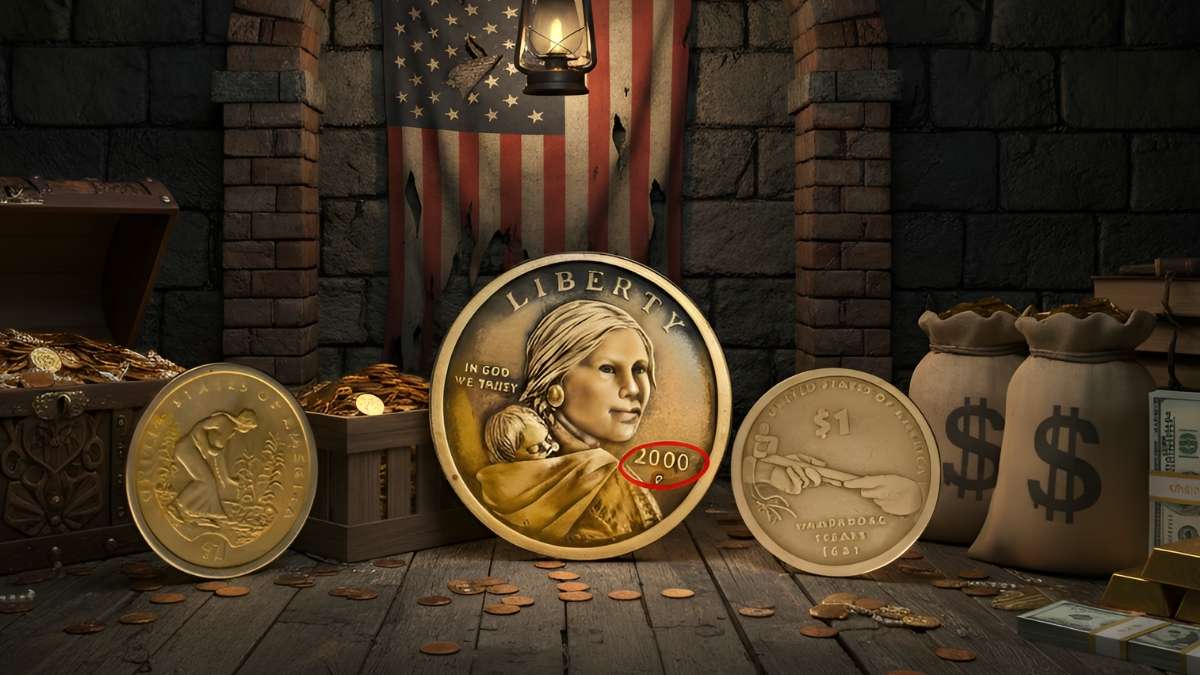
Rare Coin Alert: The Sacagawea Dollar was first introduced in 2000 as a golden-colored coin designed to replace the Susan B. Anthony Dollar. Created by Glenna Goodacre, the coin features Sacagawea carrying her infant son Jean Baptiste on the obverse, while the reverse depicts a soaring eagle. Although intended for circulation, the coin quickly became more popular among collectors than everyday users, largely due to its distinctive design and limited acceptance in commerce.
Why Sacagawea Dollars Are Collectible
While millions of Sacagawea Dollars were minted, certain issues and varieties stand out. Rare minting errors, special editions, and proof strikes have transformed some coins into treasures worth thousands. Collectors prize these coins because they combine historical significance with scarcity, and the excitement surrounding them has only grown as stories of extraordinary valuations continue to circulate.
Key Mint Marks and Their Importance
Mint marks play a crucial role in identifying where a coin was produced. For Sacagawea Dollars, the most common marks are:
- P for Philadelphia
- D for Denver
- S for San Francisco proofs
Coins struck at San Francisco with proof finishes are especially desirable. Limited editions, such as those with enhanced details or special packaging, often carry higher premiums.
Famous Sacagawea Dollar Errors
Several error coins have achieved legendary status among collectors:
- 2000 Cheerios Dollar: Distributed in cereal boxes, these coins feature enhanced eagle tail feathers and are worth tens of thousands.
- 2000 P Mule Error: A coin mistakenly struck with the obverse of a Washington quarter and the reverse of a Sacagawea Dollar. These rare pieces have sold for hundreds of thousands.
- Missing Edge Lettering Issues: Some later issues were released without proper edge inscriptions, creating modern rarities.
How to Grade Sacagawea Dollars
Grading is essential for determining value. Coins are assessed on a scale from 1 to 70, with higher grades indicating better preservation. Key factors include:
- Strike quality: Sharp details and clear features.
- Luster: The coin’s shine and surface appeal.
- Wear: Minimal wear increases value.
- Eye appeal: Overall attractiveness to collectors.
Professional grading services provide certification that helps standardize value and reassure buyers.
The 2026 Value Chart
As of 2026, the market for Sacagawea Dollars remains strong. Auction records and collector demand show consistent interest in rare issues. Values vary depending on grade and rarity, but the following chart provides a general overview:
| Coin | Key Feature | Approximate Value in 2026 |
|---|---|---|
| 2000 Cheerios Dollar | Enhanced eagle tail feathers | $25,000–$40,000 |
| 2000 P Mule Error | Quarter obverse with dollar reverse | $250,000–$500,000 |
| 2001 Proof Sacagawea Dollar | Sharp details and mirror finish | $100–$500 |
| 2009 Native American Series | Rotating reverse designs | $50–$200 |
| High-Grade Circulation Issue | Exceptional condition | $1,000–$5,000 |
Everyday Discoveries and Collector Dreams
The idea of discovering a rare Sacagawea Dollar in everyday life continues to inspire collectors. While the odds are slim, stories of unexpected finds fuel the passion for searching. Coin rolls, old collections, and forgotten drawers often yield surprises. The thrill of discovery keeps the hobby alive, reminding us that treasures can sometimes be hiding in plain sight.
Lessons From Sacagawea Dollars
These coins teach us that value is not only about money but also about history and narrative. Each rare issue carries a story of its time, whether it is a promotional campaign, a minting error, or a commemorative design. Collectors cherish these stories as much as the coins themselves, making Sacagawea Dollars a lasting part of numismatic culture.

The Future of Coin Collecting
With technology making authentication easier and global markets expanding, coin collecting continues to evolve. Yet the essence of the hobby remains rooted in passion, history, and discovery. Rare Sacagawea Dollars will inspire new generations, serving as benchmarks for rarity and desirability. Whether found in a collection, at auction, or in the unlikely event of everyday change, they represent the enduring magic of numismatics.