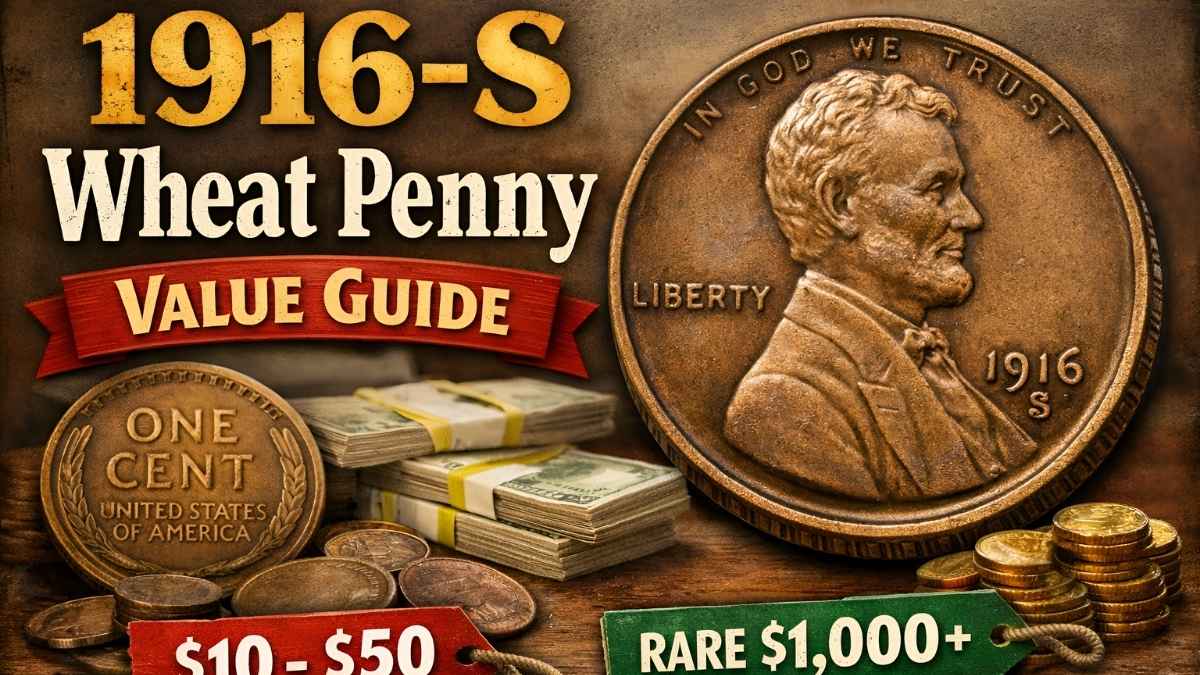
1916-S Wheat Penny Value Guide: The Lincoln Wheat penny series began in 1909, and by 1916 it had already become a familiar coin in American pockets. The San Francisco Mint produced the 1916-S issue, and while its mintage of just over 22 million may seem large, survival in high grades is far less common. This scarcity in pristine condition is what makes the 1916-S Wheat penny a valuable collectible in 2026.
Design and Composition
Victor David Brenner’s design features Abraham Lincoln on the obverse and two wheat stalks on the reverse. The coin was struck in bronze, composed of 95 percent copper and 5 percent tin and zinc. It weighs 3.11 grams and measures 19 millimeters in diameter. The small “S” mintmark beneath the date identifies it as a San Francisco issue.
Value Across Different Grades
The worth of a 1916-S Wheat penny depends heavily on condition. Lower-grade examples are affordable, but coins in higher grades can be worth hundreds or even thousands.
- Good (G-4): $2 to $3
- Fine (F-12): $4 to $5
- Very Fine (VF-20): $19 to $20
- Extremely Fine (EF-40): $38 to $40
- About Uncirculated (AU-50): $81 to $90
- Mint State (MS-60 to MS-63): $144 to $249 or more depending on eye appeal
Why Collectors Seek the 1916-S
Collectors prize the 1916-S Wheat penny because it represents early San Francisco Mint coinage, which often had lower production numbers compared to Philadelphia. Its historical context and scarcity in high grades make it a desirable addition to any Wheat penny collection.
Rare High-Grade Examples
While circulated examples are common, uncirculated coins are rare. A 1916-S penny in Mint State with strong luster and sharp details can command thousands of dollars at auction. Professional grading services are often used to verify authenticity and condition, which adds credibility and value.
Market Trends in 2026
The demand for Wheat pennies remains strong in 2026, with collectors chasing key dates and mintmarks. The 1916-S has shown steady growth in value, especially in higher grades. Auction records reveal that pristine examples continue to attract competitive bidding, reflecting the coin’s enduring appeal.
Tips for Collectors
- Check the mintmark carefully: the “S” beneath the date is crucial.
- Inspect condition: wear on Lincoln’s cheek and jawline is a key indicator of grade.
- Avoid cleaning: cleaning a coin can reduce its value significantly.
- Consider professional grading: certification adds credibility and can increase resale value.
The Excitement of Discovery
Finding a 1916-S Wheat penny in an old coin jar or inherited collection can be thrilling. While most examples are modestly valued, the possibility of uncovering a high-grade specimen worth thousands keeps collectors engaged. Every coin tells a story, and the 1916-S is a reminder of how history and rarity combine to create lasting value.
Conclusion
The 1916-S Wheat penny is more than just a cent. It is a piece of American history, a product of the San Francisco Mint’s limited production, and a coin that continues to surprise collectors with its value. In 2026, it remains a sought-after treasure, proving that even a humble penny can carry extraordinary worth.