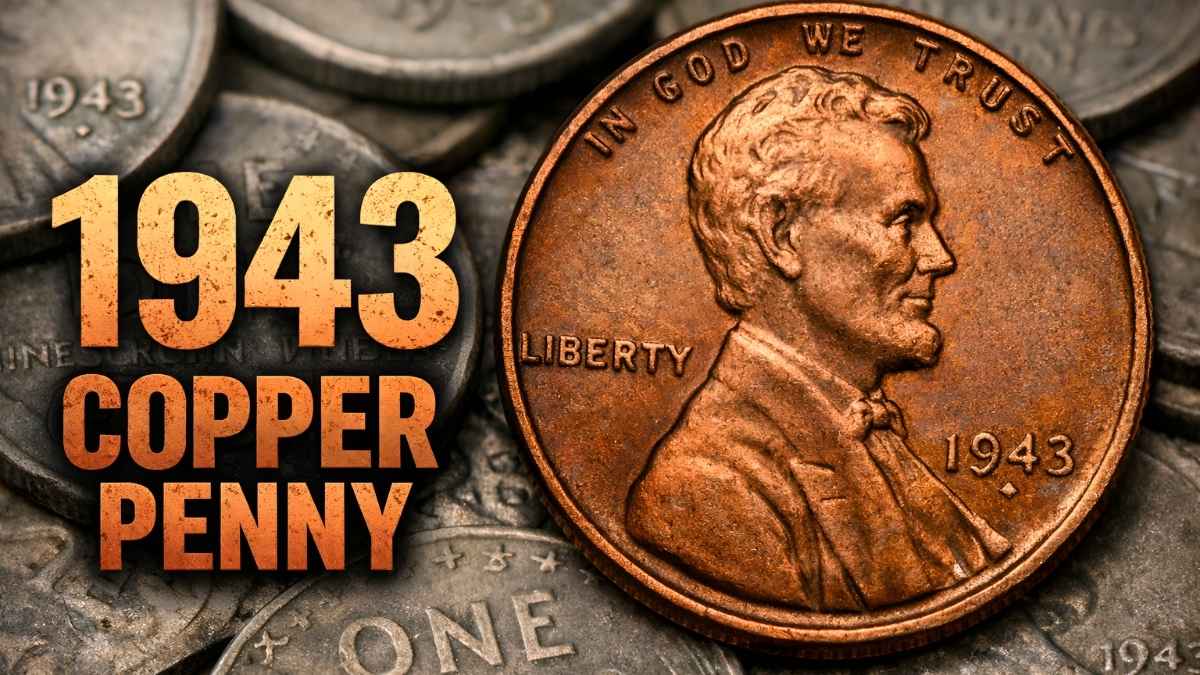
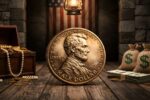
1943 Copper Penny: During World War II, the United States faced a critical shortage of copper, a metal essential for producing ammunition and other military equipment. To conserve resources, the U.S. Mint made the decision to strike pennies in 1943 using zinc-coated steel instead of copper. Millions of these steel cents were produced, but a few copper planchets from 1942 accidentally found their way into the presses. The result was the creation of the 1943 copper penny, one of the rarest and most famous error coins in American history.
How the Error Happened
The transition from copper to steel was swift, but the minting process was not flawless. Leftover copper blanks from the previous year were mistakenly fed into the coin presses. These few coins slipped through unnoticed, entering circulation alongside the steel cents. Because of this error, only a handful of genuine 1943 copper pennies exist today, making them incredibly valuable and highly sought after by collectors.
Why the 1943 Copper Penny Is So Rare
The rarity of the 1943 copper penny lies in its accidental creation. Unlike coins intentionally minted in large numbers, these pennies were never supposed to exist. Estimates suggest that fewer than 20 authentic examples survive across all three mints—Philadelphia, Denver, and San Francisco. Their scarcity, combined with the historical context of wartime America, elevates them to legendary status in the numismatic world.
The Rumored $750 Million Valuation
Over the years, stories have circulated about collections of 1943 copper pennies being worth as much as $750 million. While individual coins have sold for hundreds of thousands of dollars at auction, the idea of a combined fortune reaching such heights captures the imagination of collectors and investors alike. Even if the figure is speculative, it reflects the extraordinary demand and prestige associated with these coins.
The Role of Condition and Grading
Condition plays a crucial role in determining the value of any coin, and the 1943 copper penny is no exception. Coins are graded on a scale from 1 to 70, with higher grades indicating better preservation. A 1943 copper penny in mint state condition can command staggering prices. Coins with sharp details, minimal wear, and original luster are especially prized. If a collection contains several such high-grade examples, its combined worth could indeed be immense.
Auction Records and Market Impact
The 1943 copper penny has consistently shocked the coin market with its auction results. In 2010, one example sold for $1.7 million, setting a record for a Lincoln cent. Other specimens have fetched similar amounts in private sales. These figures demonstrate the enduring appeal of the coin and its ability to capture headlines whenever it appears. Collectors and investors view it not only as a rare artifact but also as a symbol of prestige and financial power.
Historical Significance Beyond Value
Beyond its monetary worth, the 1943 copper penny represents a fascinating chapter in American history. It reflects the challenges of wartime resource management, the ingenuity of the U.S. Mint, and the unpredictability of human error. For collectors, owning one of these coins is not just about financial gain but about holding a tangible piece of history that continues to inspire awe.
Separating Myth from Reality
While the rumored $750 million valuation is captivating, experts caution against taking such figures literally. Actual market values depend on verifiable auction results and authenticated specimens. Nevertheless, myths and speculation play an important role in sustaining interest. They keep the coin in the spotlight and ensure that its legend continues to grow with each passing generation.
The Future of the 1943 Copper Penny
As time goes on, the 1943 copper penny will likely continue to astonish the coin market. Advances in grading, growing global interest in collectibles, and the enduring appeal of numismatic rarities all contribute to its rising profile. Whether or not the $750 million rumor proves true, the coin remains a cornerstone of American numismatic heritage. Its legacy is secure, both as a financial marvel and as a cultural icon.